Amazon is warning customers across New York City that they could face additional charges of up to $5 on every order if proposed delivery legislation is approved by the City Council. The company says the measure could significantly increase operating costs, disrupt its delivery network, and ultimately make online shopping more expensive for millions of residents.
The warning marks a major escalation in Amazon’s campaign against a proposed city law that would change how large delivery companies manage their warehouses, delivery operations, and workforce.
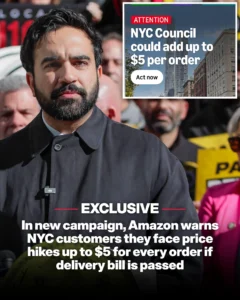
Amazon Takes Its Warning Directly to Customers
On November 19, 2026, Amazon began displaying messages on its website and mobile application informing New York City customers about the potential financial impact of the proposed legislation.
The company says the proposed rules could increase delivery-related expenses and potentially add as much as $5 to individual orders.
Amazon is also encouraging customers to contact their local City Council representatives and express concerns about the proposal. The company argues that consumers could ultimately pay more while receiving slower delivery services.
In its message to customers, Amazon explained that it currently relies on a network of independent delivery businesses operating throughout New York City.
According to the company, these local partners play an important role in maintaining fast and affordable delivery services. Amazon believes the proposed legislation could prevent it from continuing to work with these businesses under its existing operating model.
What Is New York City’s Proposed Delivery Protection Act?
At the center of the controversy is Intro 518, a proposed piece of legislation commonly associated with the Delivery Protection Act.
Sponsored by City Councilmember Tiffany Cabán, the proposal seeks to introduce stricter licensing and employment requirements for companies operating large last-mile delivery facilities.
Last-mile delivery refers to the final stage of the shipping process, when packages move from distribution facilities directly to customers’ homes or businesses.
Under the proposal, covered delivery facility operators would need to obtain licenses from New York City and directly employ workers performing certain warehouse and delivery operations rather than relying on independent third-party contractors.
Supporters believe these requirements would improve working conditions, strengthen employee protections, and make major delivery companies more accountable for workplace safety.
However, Amazon argues that changing its existing contractor-based delivery structure could create substantial financial and operational challenges.
Thousands of Delivery Workers Could Be Affected
Amazon says the proposed legislation could affect more than 5,000 delivery workers currently employed through approximately 40 third-party delivery businesses operating in New York City.
The company has also warned that it may need to reconsider the location of some of its distribution operations if the legislation passes in its current form.
Amazon has raised the possibility of moving certain facilities outside New York City, a decision that could put additional warehouse jobs at risk.
The company previously indicated that such a move could potentially affect around 2,000 warehouse positions.
These concerns have made the proposal increasingly controversial, particularly among businesses that depend on Amazon’s delivery network and workers employed by local contractors.
Why Supporters Say the Legislation Is Necessary
While Amazon is focusing on higher costs and potential job losses, supporters of the Delivery Protection Act argue that the current delivery business model creates accountability problems.
Labor organizations, including the Teamsters, have supported stronger employment requirements for large delivery companies.
Their position is that companies generating substantial revenue from delivery operations should take greater responsibility for the workers who transport their products.
Supporters also argue that direct employment could improve wages, workplace protections, training, and safety standards.
New York City Mayor Zohran Mamdani has backed the legislation, presenting it as part of broader efforts to strengthen labor protections and improve accountability among major corporations.
From their perspective, the proposed changes are intended to address long-standing concerns about subcontracting practices rather than simply increase the regulatory burden on businesses.
Amazon and City Officials Face Growing Pressure to Reach an Agreement
The disagreement has created a difficult situation for New York City policymakers.
On one side, Amazon argues that the proposed requirements could increase delivery costs, threaten local businesses, and potentially reduce employment opportunities.
On the other side, labor advocates believe stronger regulations are necessary to protect delivery workers and ensure large companies take responsibility for their operations.
City Council Speaker Julie Menin has been involved in discussions with Amazon, labor representatives, and city officials as negotiations continue.
There are also concerns among some lawmakers about the potential economic consequences of the proposal. Councilmember Phil Wong, for example, withdrew his support as a co-sponsor amid concerns about possible job losses.
The discussions suggest that the final version of the legislation could become a subject of further negotiations and possible changes.
What This Could Mean for Amazon Customers
For millions of Amazon shoppers in New York City, the biggest concern is whether online orders will become more expensive.
If Amazon’s projections prove accurate, an additional $5 per order could have a noticeable impact on households that regularly purchase groceries, household supplies, electronics, and other everyday products online.
For example, customers placing 10 orders in a month could potentially face an additional $50 in expenses if the full increase were applied to every order.
However, it is important to understand that the proposed $5 increase is Amazon’s warning about a possible future consequence. It is not an existing fee, and customers are not currently being charged an additional $5 because of this legislation.
The actual financial impact would depend on the final requirements, how Amazon adjusts its delivery operations, and whether the company decides to pass additional expenses on to consumers.
The Bigger Question: Who Should Pay for Faster Deliveries?
The dispute highlights a broader challenge facing the modern e-commerce industry.
Consumers have become accustomed to fast shipping, convenient returns, and increasingly competitive delivery prices. Maintaining these services requires extensive logistics networks, large distribution facilities, and thousands of workers.
At the same time, governments and labor organizations are increasingly questioning whether existing contractor-based business models provide sufficient protections and accountability.
Amazon’s warning puts that debate directly in front of consumers.
The company wants customers to understand that stricter delivery regulations could come with higher prices. Labor advocates, meanwhile, believe better employment standards should not be sacrificed simply to maintain low delivery costs.
As New York City continues reviewing the proposed legislation, the outcome could have implications beyond Amazon, potentially influencing how other major delivery companies structure their operations.
For now, NYC shoppers should not assume that a $5 surcharge is already in effect. The proposal remains a legislative issue, and the final outcome will determine whether delivery companies need to make significant changes to their business models.